

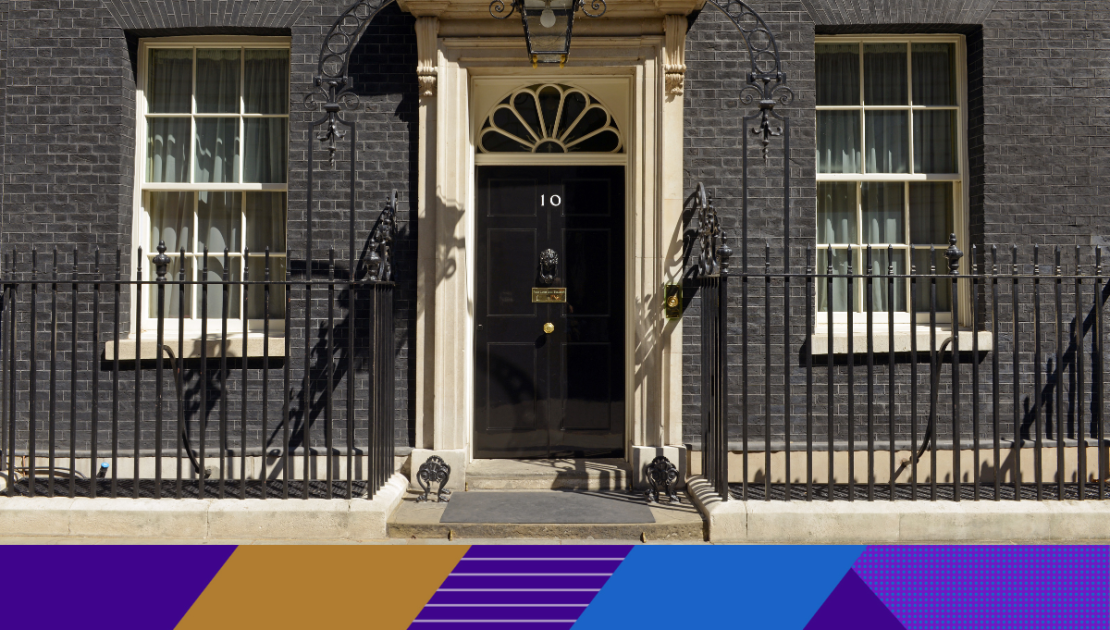
With the news, and indeed Downing Street abuzz, with talk of a potential No.10 office in Manchester, at 31ten, we are thinking ahead to what this could mean for devolution.
Greater Manchester has been one of devolution’s great success stories.
Arguably, a non-London centric No.10 outpost would be better placed in an ‘up-and-coming’ combined authority, rather than the mature combined authority that is Greater Manchester.
However, the proposed Manchester office is being framed as a way of making “power flow” across the whole county. So perhaps this presents new opportunities for our combined authorities, and a tangible step-change, in the devolution of power.
No.10 North is more than a symbolic move
No. 10 North is being positioned as much more than a symbolic relocation. This presents an opportunity to embed decision making outside of Westminster, with Manchester acting as a second centre of government, rather than simply hosting relocated civil servants. At 31ten, we are interested in what this might mean for regional funding, investment, infrastructure, growth and opportunities.
Why Greater Manchester is a devolution success story
Greater Manchester, widely regarded as a major City-Region success story, provides a compelling case study: This has demonstrated that devolved powers can produce better outcomes when local leaders have the authority to make decisions.
Greater Manchester has shown how devolution can deliver tangible change across a whole range of areas, showing that localised governance can manage significant budgets and responsibilities:
- Integration of health and social care under local leadership
- Greater control over transport systems
- Local influence over housing delivery, regeneration and planning
- A stronger relationship between government, business and academia to drive investment
- A more visible and accountable mayoral model than traditional Whitehall-led administration
A catalyst to accelerate devolution
Locating No.10 in Manchester could reinforce the wider case for devolution and the philosophy behind it: more power and more funding decisions made locally, on a regional level, can have a greater impact than when led from Westminster. There is a strong logic in ministers and officials spending more time in the regions whose economies they are trying to grow.
If this move goes ahead, it could represent a significant milestone, reshaping and reinvigorating devolution across England. It may create more demands for powers from metro mayors and combined authorities in areas such as transport, skills, planning and economic development, which may be met by a greater appetite for this from Central Government.
The impact on other city regions
Since political and economic power has historically been concentrated in London, establishing a prime ministerial presence in Manchester may signal that national government is prepared to govern differently.
What remains to be seen is whether this will be accompanied by a genuine transfer of powers, and whether a move to Manchester will benefit other city regions or widen the gap between them and Manchester.
Whatever policies may fall out of this move, it will be the city-regions that are most ready to act, with clear, evidence-based, investable propositions that stand to reap the greatest rewards.
How 31ten can help
To discuss your ambitions and learn how we can help you position your organisation to take advantage of the next phase of devolution, get in touch with Bernie Lally, one of our Principal Consultants who leads on Devolution and Local Government Reorganisation (LGR).
